
Background
Food safety in care homes
A care home kitchen is a food business. It follows the same UK food hygiene law as a restaurant: the operator must put in place, implement and maintain procedures based on HACCP principles, and keep records that show those procedures are followed.
What makes care home kitchens different is who they cook for. Residents are often older or vulnerable, so consistent food safety evidence matters to environmental health officers, to inspectors and to the provider's own quality team.
For a single home, a well-kept paper diary can do the job. For a group, the challenge is making sure the same checks happen, and are recorded honestly, in every kitchen, on every shift, including weekends and when the cook is on leave.
That is where digital food safety records for care homes help. A Safer Risk supports the monitoring and record-keeping side of your food safety management system, and gives group leaders one view of how every home is doing.
Care home kitchen records
The food hygiene records care home kitchens keep
Most HACCP-based systems, including SFBB, ask for a similar set of routine records. Here is where each one lives in A Safer Risk.
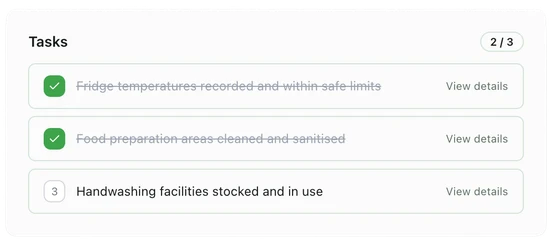
Opening and closing checks
Safe start-up and shut-down routines, signed off by the person on shift.
Fridge and freezer temperatures
Routine readings with a clear record when something is out of range.
Cooking and hot holding
Checks at the points your food safety system says matter, where your menu needs them.
Cleaning schedules
What to clean, how often, and evidence that scheduled cleans happened.
Allergen procedures
Up-to-date procedures and training records that staff and inspectors can find quickly.
Suppliers and deliveries
Approved supplier information, specifications and delivery checks where they form part of your controls.
Periodic review and audits
Structured kitchen audits so reviews are based on records rather than memory.
Incidents and complaints
Food safety incidents, near misses and complaints logged, investigated and closed.
HACCP and SFBB
HACCP, SFBB and your care home's food safety system
Whichever approach your homes use, A Safer Risk sits alongside it rather than replacing it.
The legal principle
HACCP
The principles UK food law asks every food business to base its procedures on. A traditional HACCP plan works through hazards, critical control points and limits in detail, and usually needs a food safety adviser. Read more in our guide to HACCP monitoring software.
The FSA pack
Safer Food, Better Business
The Food Standards Agency's free pack helps smaller kitchens in England and Wales apply HACCP principles with a diary and safe methods. It works well for a single small kitchen. See how groups run it day to day with digital Safer Food Better Business.
A documented system
Food safety management packs
Some groups use a food safety management system written for their homes, such as the packs our sister consultancy Safer Food Scores provides. Like SFBB, these are founded on HACCP principles.
Multi-home groups
Keeping standards consistent across every home
Paper diaries and shared spreadsheets can work in one kitchen. Across a group of homes, the same gaps tend to open up.
Paper diaries and spreadsheets
- Every home keeps its own kitchen folder, and nobody at head office can see today's checks without phoning round.
- Temperature and cleaning records written up at the end of a shift, or the day before an inspection.
- A problem is noted in the diary, but there is no record of who fixed it or whether it came back.
- Different homes working from different versions of the same procedure.
- Quality leads spend their visits collecting folders instead of improving standards.
Digital checks and records
- Completion, missed tasks and overdue actions visible for every home in one place.
- Scheduled checks completed on a phone or tablet, with photos, notes and timestamps.
- Audit findings, risk control gaps and incidents become owned, dated actions tracked to completion.
- One current, versioned copy of each procedure, with review dates and reminders.
- Structured audits and trends that compare homes side by side on one dashboard.
Group quality leads can set checklist and audit templates once, assign them to every home, and use the compliance dashboard to see where follow-up is slipping, without waiting for the next site visit.
Inspection readiness
Evidence for EHO visits and CQC inspections
Inspectors want to see that your procedures are followed in practice, not just written down. A Safer Risk keeps that evidence organised for each home.
Completed checks
Daily and weekly kitchen checks with who did them, when, and any photos or notes.
Current procedures
Policies and procedures with versions, review dates and draft, active or overdue status.
Audit history
Scored audits with findings and photo evidence, and how results have moved over time.
Action trail
Each issue with an owner, a due date and a record of when it was put right.
Incident records
Incidents with the investigation, root cause and follow-up that closed them.
A group-wide view
Completion, overdue work and recurring issues for every home on one dashboard.
A Safer Risk is not approved or endorsed by the CQC, and using it does not guarantee an inspection outcome or a food hygiene rating. Food hygiene inspections are carried out by local authority environmental health officers; the CQC looks at the safety and quality of care as a whole. Good records help you show what you already do.
Platform fit
How A Safer Risk fits a care home's food safety system
The table shows which parts stay with your team and which modules help. Explore each module on its feature page.
| Care home need | Who or what helps | How teams use it |
|---|---|---|
| Your HACCP-based food safety system (SFBB, an FSMS pack or your own plan) | Your team or food safety adviser
| Deciding hazards, controls and limits needs food safety knowledge, and A Safer Risk does not do it for you. Keep the documented system versioned and review-dated in the document store. |
| Daily and weekly kitchen checks | Opening, closing, temperature and cleaning routines scheduled for each home, with completion tracked and missed or overdue tasks clearly visible. | |
| Food safety and health and safety audits | Templates built around your own standards, with consistent minor, major and critical ratings so results compare fairly across homes. | |
| Hazards and control measures | Record hazards, score likelihood and severity, note controls and route assessments for review and sign-off. It supports your hazard analysis; it is not a full HACCP plan. | |
| Corrective actions and follow-up | Raise owned, dated actions from audit findings and from control gaps in risk assessments, and investigate incidents with an owner and root cause. What staff do when a check fails is still set out in your food safety system. | |
| Incidents, near misses and complaints | Log incidents in seconds from any device, including by QR code at the location, and spot repeat issues before they escalate. | |
| Oversight across the group | Completion rates, missed tasks, outstanding and overdue actions and recurring issues rolled up by home. |
See all modules on the features overview.
Case study
Fylde Care Group: one standard across three homes
Fylde Care Group is an independent, family-owned provider of residential, respite and dementia care with three homes on the Fylde coast in Lancashire.
Running three homes means the same expectations for food hygiene, health and safety and documentation in each one. They use A Safer Risk as the shared system for operational compliance across all three: site teams complete scheduled checks and audits on mobile or desktop, and leaders see progress and outstanding actions in one place.

The outcome
- Consistent checklists and audits across all three homes
- Faster visibility of overdue tasks and open actions
- Central document store with clear review status
- Less time spent chasing updates across sites
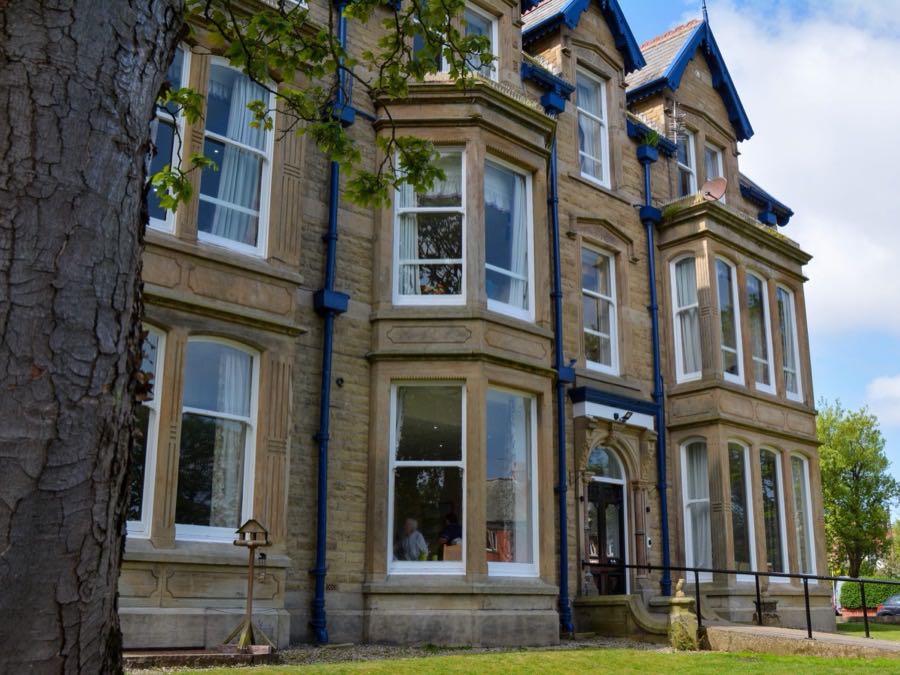
Rose House
St Annes
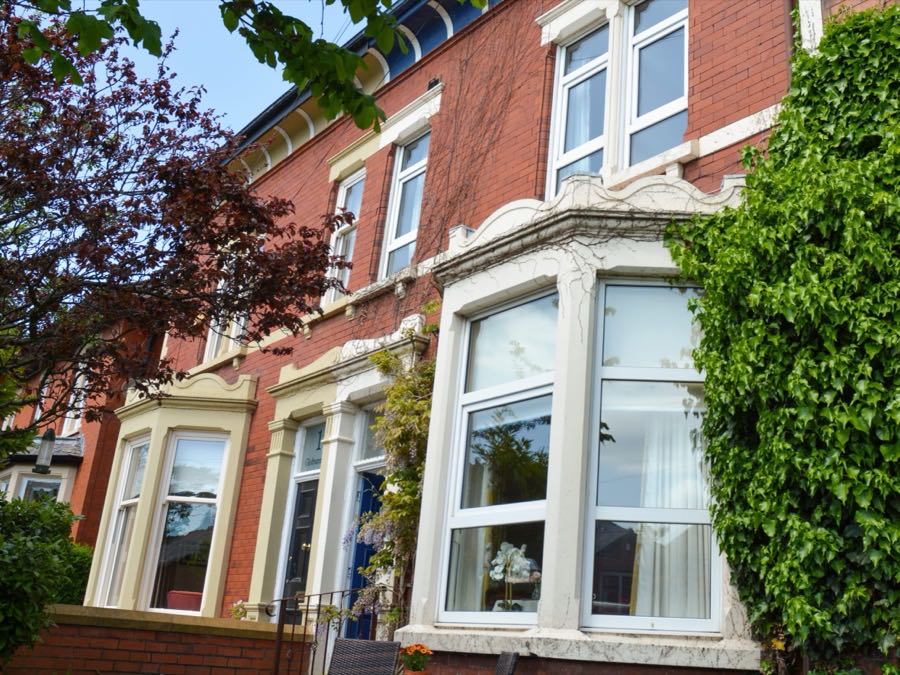
Bluebell House
Poulton-le-Fylde
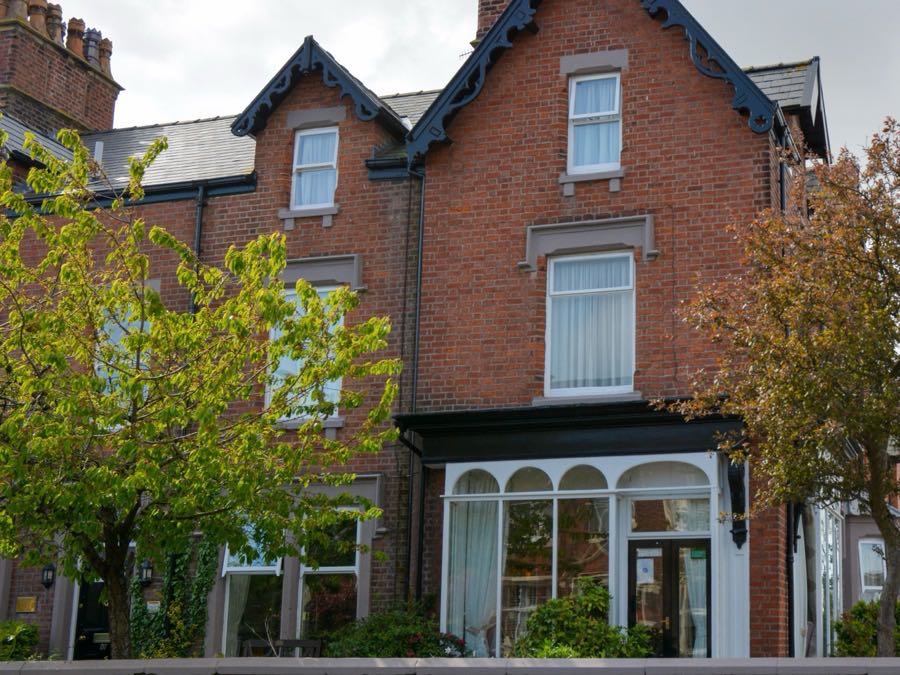
Hedges House
Lytham
Who it is for
Built for care home groups
A Safer Risk is designed for providers that need the same food safety and health and safety standards in every home, where catering teams must show robust controls to regulators and to their own leadership. The same platform also serves restaurant, pub and hotel groups, so it is built for multi-site operations from the start.
Not sure which plan fits? Book a demo and we will walk through your homes, or start a free trial to try checklists and documents on your own data.
Core
£69
per site, per month
Checklists, document management and compliance visibility.
Professional
£149
per site, per month
Adds deeper audit and reporting for formal scored inspections.
Prices on a 12-month contract. Per-site pricing scales with your group. Compare plans on the pricing page.
FAQ
Care home food safety questions
- Do care home kitchens need a HACCP-based food safety system?
- Yes. A care home that prepares and serves food is a food business, so the same UK food hygiene law applies as for a restaurant: the operator must put in place, implement and maintain procedures based on HACCP principles. The law expects the system to be proportionate to the size of the kitchen and the food it handles. Many smaller kitchens use the FSA's Safer Food, Better Business pack in England and Wales, CookSafe in Scotland or Safe Catering in Northern Ireland, and larger groups often document their own system. Your local authority is the best place to confirm what is expected for each home.
- Can a care home keep its food safety records digitally?
- UK law does not require food safety records to be kept on paper, and many care providers keep them digitally. Environmental health officers look for evidence that your procedures are understood and followed in practice: checks completed, problems put right and the system reviewed. Software helps you produce that evidence consistently, but it does not replace your legal duty to manage food safety. If you are moving an established paper system to software, we recommend discussing the change with your local authority.
- Will A Safer Risk help with CQC inspections?
- A Safer Risk can help you organise the records you may want to show inspectors and your own quality team, such as completed kitchen checks, current procedures, audit results and the actions taken when something needed fixing. It is not approved or endorsed by the CQC, and using it does not guarantee an inspection outcome or a food hygiene rating. Food hygiene inspections are carried out by local authority environmental health officers, and the CQC looks at the safety and quality of care as a whole.
- Does A Safer Risk write our HACCP plan or food safety management system?
- No. A Safer Risk does not write, approve or take ownership of your HACCP plan or food safety management system. It supports the monitoring and record-keeping side: scheduled checks, evidence, audits, action tracking, incident logging and a place to store your documented procedures. Safer Food, Better Business and the food safety management system packs from our sister consultancy Safer Food Scores are founded on HACCP principles, but neither is a traditional, risk-assessment-style HACCP plan. If you need help with the system itself, Safer Food Scores provides HACCP, training and documentation support.
- Can we manage health and safety in the same system as food safety?
- Yes. Audit and checklist templates are built around your own standards, from food hygiene to health and safety, and the risk assessment and incident manager modules cover hazards and incidents across the home, not only the kitchen. Fylde Care Group use A Safer Risk for both food hygiene and health and safety across their three homes.
- How does A Safer Risk work for a group of care homes?
- Audits, checklists, documents and actions sit in one workspace scoped to each home, so every kitchen works to the same templates while each home manager stays accountable for their own site. The compliance dashboard then compares homes side by side, showing completion, missed tasks, overdue actions and recurring issues for the whole group.
- How much does A Safer Risk cost for a care home group?
- Core is £69 per site per month on a 12-month contract, and Professional is £149 per site per month. Plans include checklists, document management and compliance visibility, with Professional adding deeper audit and reporting capability. Compare modules on the pricing page or book a demo to match a plan to your homes.
Next step
The same food safety standard in every home
See how checklists, documents, audits and action tracking keep your care home kitchens consistent, on a demo or in a free trial.